
Karoline Leavitt Gives a Bizarre Defense of Trump’s Threat to Harvard

In a recent media appearance, White House Press Secretary Karoline Leavitt defended President Donald Trump’s controversial position regarding Harvard University. The elite institution has found itself in a peculiar situation, facing significant cuts to its federal funding due to the actions of the Trump administration. This issue escalated when it was reported that the administration is considering canceling remaining federal contracts with Harvard, which total approximately $100 million. This follows earlier funding reductions totaling about $2.65 billion.
Leavitt’s Critique of Harvard’s Financial Practices
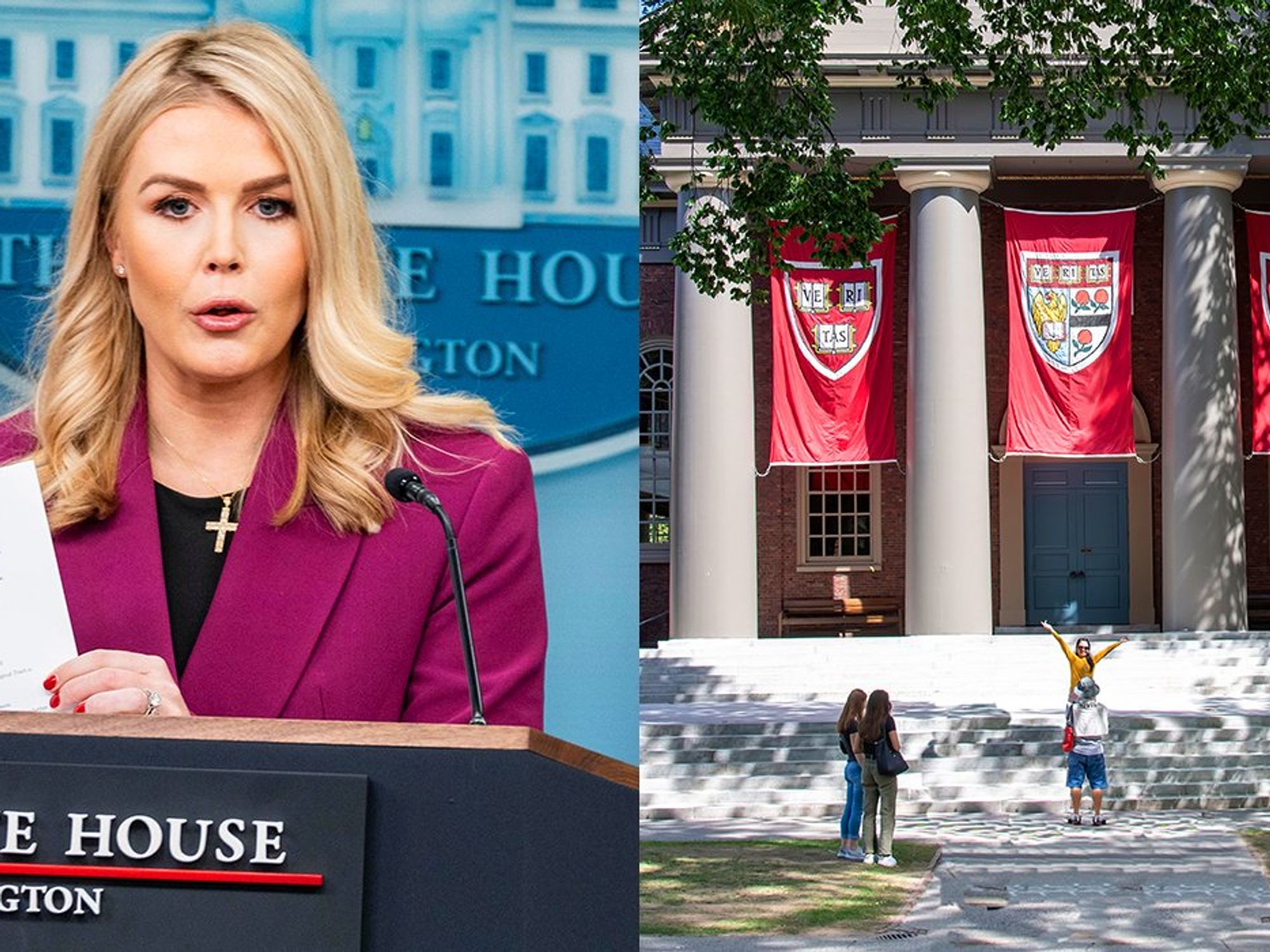
Karoline Leavitt, in her defense of Trump’s actions, argued that Harvard, which boasts a colossal endowment of around $53 billion, should not be entitled to taxpayer money if it is perceived to promote what she termed “anti-American values.” This point came to light during her media engagements, where she criticized the university for allegedly enabling antisemitic behavior among its students and faculty. According to Leavitt, financial support from the federal government should not be extended to institutions that do not align with the core values of American society.
In a statement reflecting Trump’s sentiments, Leavitt suggested reallocating federal grant funds from Harvard to trade schools, emphasizing the need to prioritize vocational education over traditional university programs. She argued that this shift would ultimately benefit American society more, given the importance of practical skills in today’s job market.
The Focus on Vocational Training Over Liberal Arts

During her appearance, Leavitt reiterated the administration’s commitment to promoting educational programs that are closely aligned with what she referred to as “American values.” She specifically mentioned the need for vocational training in trades, which she characterized as more immediately beneficial compared to courses that might fall under the umbrella of “LGBTQ graduate majors” at Harvard.
This perspective reflects a broader critique from the Trump administration aimed at challenging what they perceive as elitism and liberal bias endemic in higher education. By targeting prestigious institutions like Harvard, Leavitt and Trump appear to be attempting to resonate with supporters who prioritize practical skills and vocational training over what they consider less applicable academic pursuits.
Political Implications of the Administration’s Actions
The actions taken by the Trump administration against Harvard are part of a larger narrative concerning higher education in America. With increasing tensions around issues of free speech, perceived bias, and the role of taxpayer money in funding elite institutions, the administration’s stance reflects a strategic alignment with voters who feel disenfranchised by the educational elite. By publicly challenging Harvard, they aim to galvanize support among constituents who feel that the nation’s educational systems should reflect a set of values aimed at enhancing practical skill development for all citizens.
As discussions continue surrounding education funding and the role of institutions like Harvard, it remains to be seen how these policies will impact the broader landscape of American higher education. Leavitt’s comments and the administration’s approach indicate a clear intention to reshape the dialogue, focusing less on traditional academic pursuits and more on vocational training that they believe serves the country’s best interests.
Overall, Karoline Leavitt’s bizarre defense of Trump’s actions demonstrates a significant shift in educational focus, challenging the established norms of funding and support for universities like Harvard in favor of a more practical, vocational approach. This strategy will likely continue to be a contentious topic as discussions unfold about the future of education in the United States.
For more insights on educational funding and the political implications of Trump’s policies, stay informed and engaged in the ongoing dialogue surrounding these critical issues.
Leave a Reply