
Watch Fox News Melt Down Over Wives Voting Independently

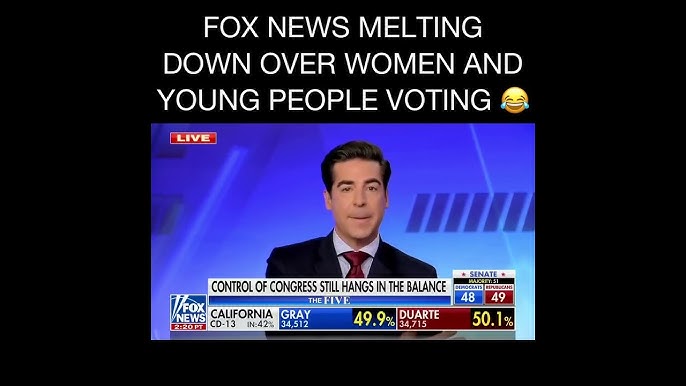
In a recent episode of Fox News’ “The Five,” host Jesse Watters ignited a fierce debate by expressing astonishment over the notion that wives might vote differently than their husbands. Watters compared a scenario in which his wife, Emma, voted for Vice President Kamala Harris while he supported Donald Trump to infidelity, drawing laughs from his co-hosts but raising important questions about gender dynamics in politics. This remark, delivered with a certain level of arrogance, stands in sharp contrast to Watters’ own controversial history, including infidelity in a previous marriage, prompting viewers to reflect on the hypocrisy of such statements.
The Underlying Issues of Sexism in Political Commentary

Kat Abughazaleh from Mother Jones has pointed out that Watters’ comments reveal a pervasive pattern of sexist attitudes within contemporary political conversation. His bafflement over wives voting independently highlights a broader societal expectation that women should align with their husbands’ political views, essentially undermining their personal agency. This notion not only reinforces harmful stereotypes but also echoes past remarks from prominent figures such as Donald Trump, who has made it clear through statements that he intends to protect women “whether they like it or not.” Such sentiments suggest that a woman’s political voice is secondary to that of her partner.
Liz Cheney’s insights into this issue are also significant. Cheney, a former congresswoman and outspoken critic of Trump, anticipates that many voters, particularly women, may choose to vote based on their moral compass instead of overtly expressing their preferences. This expectation underscores the complicated relationship women have with political expression, often resulting in a hesitation to publicly declare opinions that diverge from traditional norms.
The Significance of Private Voting Decisions

The emphasis on privacy in voting cannot be understated. Former First Lady Michelle Obama has weighed in on this matter as well, championing the idea that the right to vote is a deeply personal one. She argues that while public opinion and social pressure are prevalent, the act of voting should be shielded from external judgment. Private voting decisions allow individuals to make choices that reflect their true beliefs without fear of backlash from family, friends, or society at large.
As the electoral landscape shifts closer to election time, the implications of these private choices become more prominent. Voter sentiment may not always align with expected party loyalty, particularly among demographics often perceived as homogeneous in their political affiliations. With rising independence and discontent toward traditional party lines, individuals, especially women, may feel emboldened to cast votes based on their convictions rather than adhering to the political ideologies of their partners.
The Repercussions of Gendered Political Assumptions

Watters’ commentary has sparked conversations around the assumption that couples must vote in tandem. This perspective severely limits individual agency and perpetuates a narrative where women’s voices are further marginalized. As women increasingly become a significant voting bloc, failing to recognize their independence in political choices could lead to more significant disconnections within party platforms and strategies.
Additionally, this phenomenon calls into question the broader cultural attitudes toward women’s empowerment in political discourse. The emerging trend of women asserting their political independence illustrates a clear departure from antiquated expectations and a move toward greater autonomy in decision-making processes. As societal norms evolve, so too should our understanding of women’s roles in politics and the sanctity of their voting choices.
In conclusion, the humorous take from Fox News may mask a more serious discussion about the implications of gender roles in voting behavior. As more women exercise their right to vote independently, it is essential to foster a culture that respects and values individual choice. Voter independence should be celebrated rather than ridiculed. To engage more deeply in this crucial conversation, consider sharing your thoughts on the importance of personal agency in voting, and challenge the stereotypes that persist in political dialogue. Your voice matters—let it be heard!

Leave a Reply